Jay Rubin
When Jay Rubin first encountered Haruki Murakami's fiction in the late 1980s, the Japanese author was still relatively unknown in the anglophone world. Rubin, who had spent years teaching at the University of Tokyo and cultivating a scholar's intimacy with Japanese literature, recognized something immediately: a voice that felt utterly contemporary yet rooted in a distinctly Japanese sensibility, demanding a translator who could honor both registers. He became that translator—the one who would introduce Murakami to English readers and, in doing so, reshape what Western audiences understood about Japanese fiction.
Rubin's early translations of Murakami's story collections—The Elephant Vanishes and After the Quake—established his signature approach: a prose style that feels almost conversationally transparent, yet underneath runs an undercurrent of the uncanny and dreamlike. Reading Rubin's Murakami, you never feel the machinery of translation grinding. Instead, there's an eerie naturalness, as if Murakami had always written in English. This deceptive simplicity masks extraordinary precision. When a character in one of these stories encounters something impossible—a talking sheep, a woman who only appears after midnight—the strangeness arrives with the casualness of weather, because Rubin understands how Murakami deploys tone as the true engine of his fiction.
This skill became essential when Rubin tackled Murakami's monumental novels. Norwegian Wood, After Dark, and the sprawling 1Q84 trilogy demanded a translator who could sustain narrative momentum across hundreds of pages while preserving the author's particular relationship with digression and philosophical musing. Rubin's version of 1Q84 became definitive—the translation against which all subsequent discussions of the novel in English occur. The book's twin moons and alternate reality required a translator supple enough to move between the mundane and the metaphysical without signaling the seams.
Beyond Murakami, Rubin's work with Ryūnosuke Akutagawa—most recently in the innovative manga-illustrated edition of Rashomon and Other Stories—demonstrates his range. Yet it is his decades-long collaboration with Murakami that defines his legacy. In Absolutely on Music, Rubin's translation of conversational exchanges between Murakami and conductor Seiji Ozawa, one hears a different register: intimate, immediate, the voice of a writer thinking aloud. It's a reminder that Rubin's gift isn't mimicking his author's style, but rather revealing what lies beneath it—the precise frequency at which each work vibrates.
On InkEast (22)

1Q84: Book 3
2011
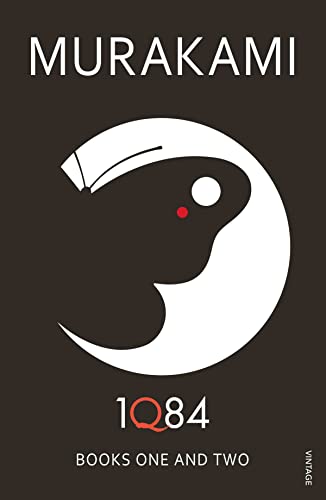
1Q84: Books 1 and 2
2011
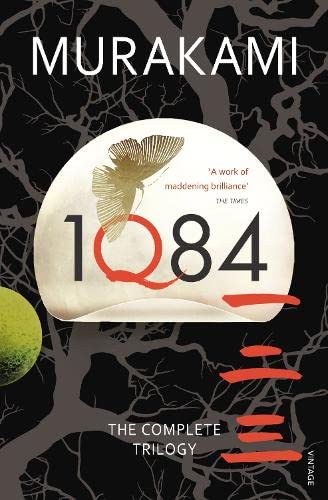
1Q84: The Complete Trilogy
2022

Absolutely on Music: Conversations
2016

After Dark
2007
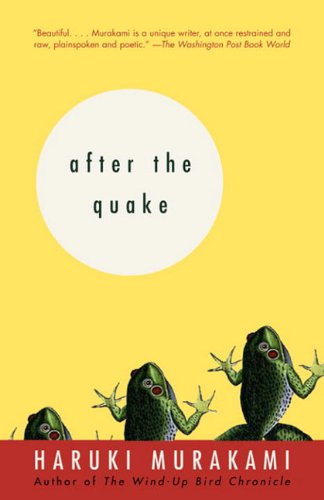
After the Quake: Stories
2007

Norwegian Wood
2010

The Elephant Vanishes: Stories
1994

The Wind-Up Bird Chronicle
1998
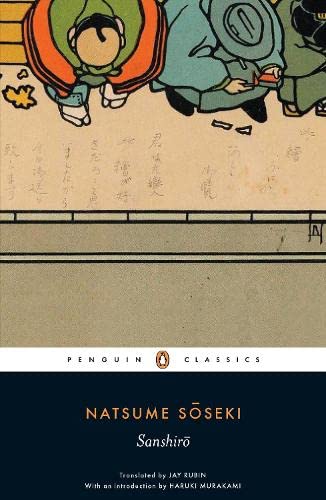
Sanshiro
2009
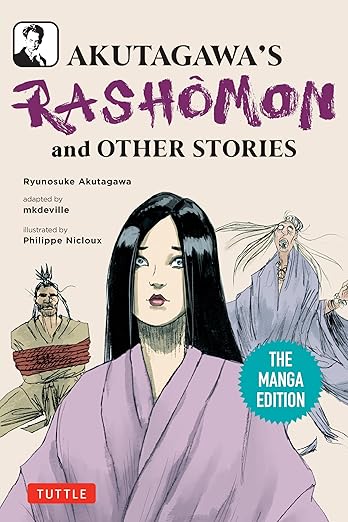
Akutagawa's Rashomon and Other Stories: The Manga Edition
2024

Rashomon
2017
Super-Frog Saves Tokyo
2025

Tokio blues
2015

The Spider's thread and other stories
1987
The Miner
2015
Yabu No Naka
2017
TuTze-Chun
1965
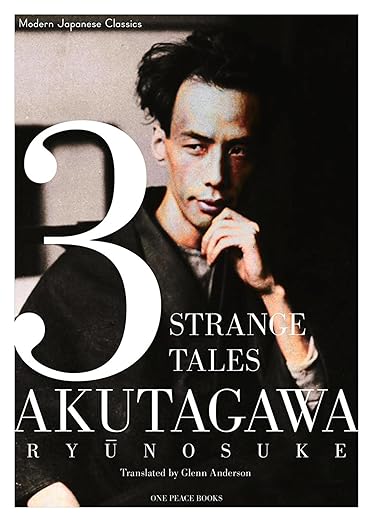
3 Strange Tales
2012

The Beautiful and the Grotesque
2010
Three Japanese Short Stories
2018

Asakusa Park: A Collection of Short Stories
2025