Michael Emmerich
Michael Emmerich spent years working in Japan before he realized translation wasn't a separate career path—it was the only honest way to spend his time with literature. Unlike translators who arrive at the craft through academic channels or language departments, Emmerich drifted into it through immersion, through the kind of patient attention that comes from living inside a language rather than studying it. This biographical detail matters because it shapes everything about his work: his translations have the texture of someone who has sat in Tokyo apartments, overheard conversations, felt the weight of Japanese syntax in his bones.
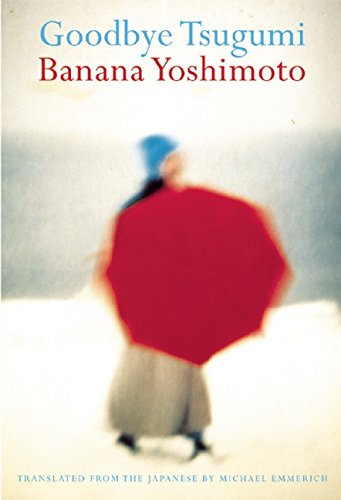
His first major publication, Asleep (2000), introduced English readers to Banana Yoshimoto's dreamlike precision—those stories where emotional collapse moves with the quiet inevitability of a season changing. Emmerich's choice to preserve Yoshimoto's sentence-level minimalism, her refusal of explanation, set the tone for a body of work defined by restraint. Where lesser translators might have "clarified" or "smoothed" the Japanese, Emmerich trusts the original's silences. In The Lake (2011), his translation of Yoshimoto's novel about grief and isolation, readers encounter prose that seems to float just above explanation, hovering in the space between what characters say and what they mean—a particularly Japanese narrative mode that Emmerich honors by resisting the impulse to make things comfortable for English speakers.
His work with Hiromi Kawakami's Manazuru (2012) demonstrates his range beyond Yoshimoto's minimalism. Here, in a novel that braids memory, obsession, and the geography of a coastal town, Emmerich handles longer, more elaborate sentences without losing their essential delicacy. The book's meditation on how places hold us finds its match in a translation that catches both the sensory specificity and the philosophical undertow.
Over two decades, Emmerich has become one of the most significant translators of contemporary Japanese fiction, though he remains less celebrated than the scale of his work deserves. His refusal of flash or obvious virtuosity—the translator's equivalent of Yoshimoto's own aesthetic—has perhaps kept his name from blazing as brightly as it might. But writers like Yoshimoto and Kawakami chose him precisely because he disappears into their texts. He's currently working on new translations that promise to expand his range further into contemporary Japanese voices.