Howard Hibbett
Howard Hibbett arrived at Japanese literature through the back door of language study, but what he discovered in those grammatical alleyways was a sensibility so strange and baroque that it seemed to demand an entirely new English vocabulary. Working primarily with Jun'ichiro Tanizaki—that master of perversity, obsession, and the eroticism lurking in everyday domestic life—Hibbett developed a translation method that prizes precision over smoothness, understanding that Tanizaki's sentences often mean to disturb rather than seduce. A reader of Hibbett's Quicksand (1995) encounters prose that refuses to look away from its own complications, mirroring the narrator's spiral into attraction and moral vertigo with almost clinical exactitude.
What distinguishes Hibbett's approach is his refusal to sand down Tanizaki's perversities for Anglo-American comfort. In The Key and Diary of a Mad Old Man (2004)—often published together—Hibbett renders the novelist's increasingly explicit explorations of aging sexuality not as transgressive confessions but as philosophical inquiries conducted in the language of desire itself. The Diary especially presents a man unraveling in real time, and Hibbett's English captures the narcissistic precision with which Tanizaki's narrator catalogs his own degradation, the prose becoming simultaneously more lucid and more deranged as the old man's obsessions tighten their grip. There is no winking at the reader here, no softening irony. Hibbett trusts the material and, more importantly, trusts his readers to sit with its discomfort.
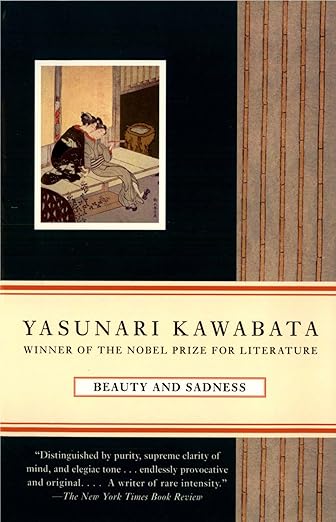
His later translation of Yasunari Kawabata's Beauty and Sadness (2013) finds him working with a different sensibility—Kawabata's more elegiac, more invested in absence and aesthetic restraint—yet Hibbett's touch remains recognizable: attentive to silence as much as to speech, aware that what isn't said carries weight. The novel's structure, with its movements between past and present, finds its formal equivalent in Hibbett's careful modulation of tense and tone, allowing readers to experience the ghostliness of memory as texture rather than merely as plot device.
Over six decades of practice, Hibbett has created a body of work that treats the translator's role not as one of domestication but of precise witness. His versions remain the standard not because they're beautiful—though often they are—but because they insist on fidelity to the original's refusal to be easy.