Geoffrey Trousselot
Geoffrey Trousselot discovered Japanese while working as a pianist in Tokyo—not in a classroom, but through late-night conversations in bars, through sheet music notations, through the particular music of the language itself. He was drawn first to the sound of Japanese, then to its untranslatable densities, the way a single word could hold multiple meanings depending on context and breath. When he eventually enrolled in formal study, he approached grammar like musical theory: not as rules to memorize, but as a system of relationships and resonances.
This musical sensitivity infuses his translation of Toshikazu Kawaguchi's work, beginning with Before the Coffee Gets Cold (2020), the deceptively simple story of a Tokyo café where patrons can travel through their own timelines. Trousselot's English mirrors Kawaguchi's restraint—there's no overexplanation, no narrative showing-off. Instead, sentences breathe with space. Dialogue lands with the clarity of a piano note. What might have read as sentimental in clumsy hands becomes genuinely moving: the recognition that time is not something we possess, but something we inhabit.
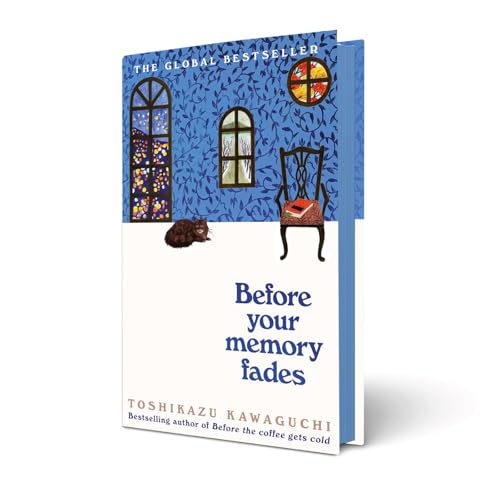
The series has become his life's work in ways that seem to delight rather than constrain him. Before We Say Goodbye (2023), Before Your Memory Fades (2025), Before We Forget Kindness (2025)—each arrives as a variation on a theme, each deepening the emotional architecture Kawaguchi has constructed. Trousselot's consistency across these volumes is itself an achievement. The café remains legible, the stakes remain clear, yet each book finds new registers for exploring loss, regret, and the peculiar grace of second chances. His translation has helped make Kawaguchi's series a cultural phenomenon in English-speaking markets, with millions of copies in circulation.
What distinguishes Trousselot's work is his refusal to push the emotional button. Where translation often errs toward either flatness or melodrama, he maintains an almost ascetic precision—trusting readers to find their own tears. The sentences don't insist on profundity; they create conditions where profundity becomes possible. As he prepares Before I Knew I Loved You (2026), his eighth volume in this world, Trousselot continues to prove that dedicated series translation, far from being repetitive, can be an art form unto itself—a long conversation between languages about what remains when time finally runs out.