Alexander O. Smith
When Alexander O. Smith first encountered Keigo Higashino's The Devotion of Suspect X, he recognized something that would consume the next decade of his career: a puzzle-box mystery that demanded absolute precision in translation, where a single misplaced phrase could collapse the entire logical architecture. That 2011 translation became his entry point into the broader world of Higashino's Detective Galileo series, a commitment that has made Smith, perhaps more than any other translator working today, the English-language custodian of one of Japan's most mathematically intricate crime writers.
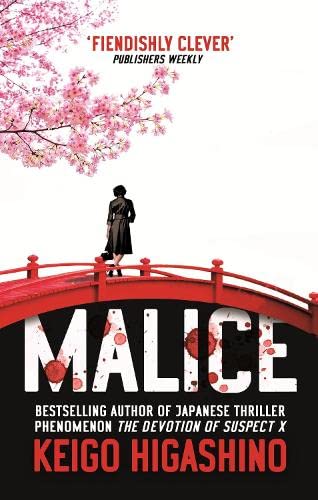
Smith's approach to Higashino differs markedly from how Western translators typically handle the mystery genre. Where others might streamline or clarify, Smith preserves the deliberate withholding of information, the way Higashino layers clues beneath layers of misdirection. In Malice (2014), a novel that doubles as both detective story and literary critique, Smith captures the venom in the protagonist's contempt for a rival author—a voice that required not just linguistic accuracy but tonal precision, a willingness to let sentences breathe with the same calculated restraint as Higashino's original Japanese. The result reads less like a translation than like prose written in English from the outset, yet never loses the sense that beneath it lies another language entirely.
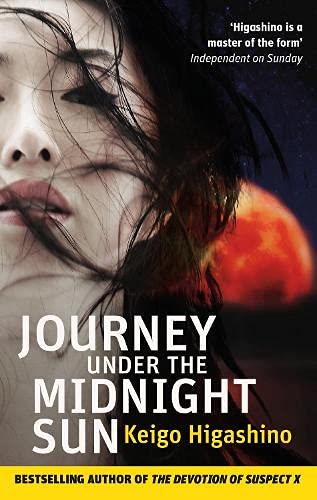
His subsequent translations—Salvation of a Saint (2012), A Midsummer's Equation (2016), and Journey Under the Midnight Sun (2015)—form a constellation around the same obsession: how to render mathematical certainty and human motive in English without sacrificing one for the other. In Journey Under the Midnight Sun, an 800-page prequel that explores the origins of Detective Galileo's central case, Smith manages the feat of sustaining tension across multiple timelines and narrative voices, each requiring its own calibrated register.
What distinguishes Smith's work is his refusal to domesticate Higashino. The settings remain unmistakably Japanese—the procedural details specific, the cultural references intact—yet the prose never alienates an English reader. This is translation as a high-wire act: maintaining fidelity to source while creating immediate readability. As Higashino's detective novels continue to find new English-language audiences, often through Smith's mediation, the question becomes not whether his translations serve the original, but whether they've become something equally vital: the first encounter many readers will have with one of contemporary literature's most rigorous minds.