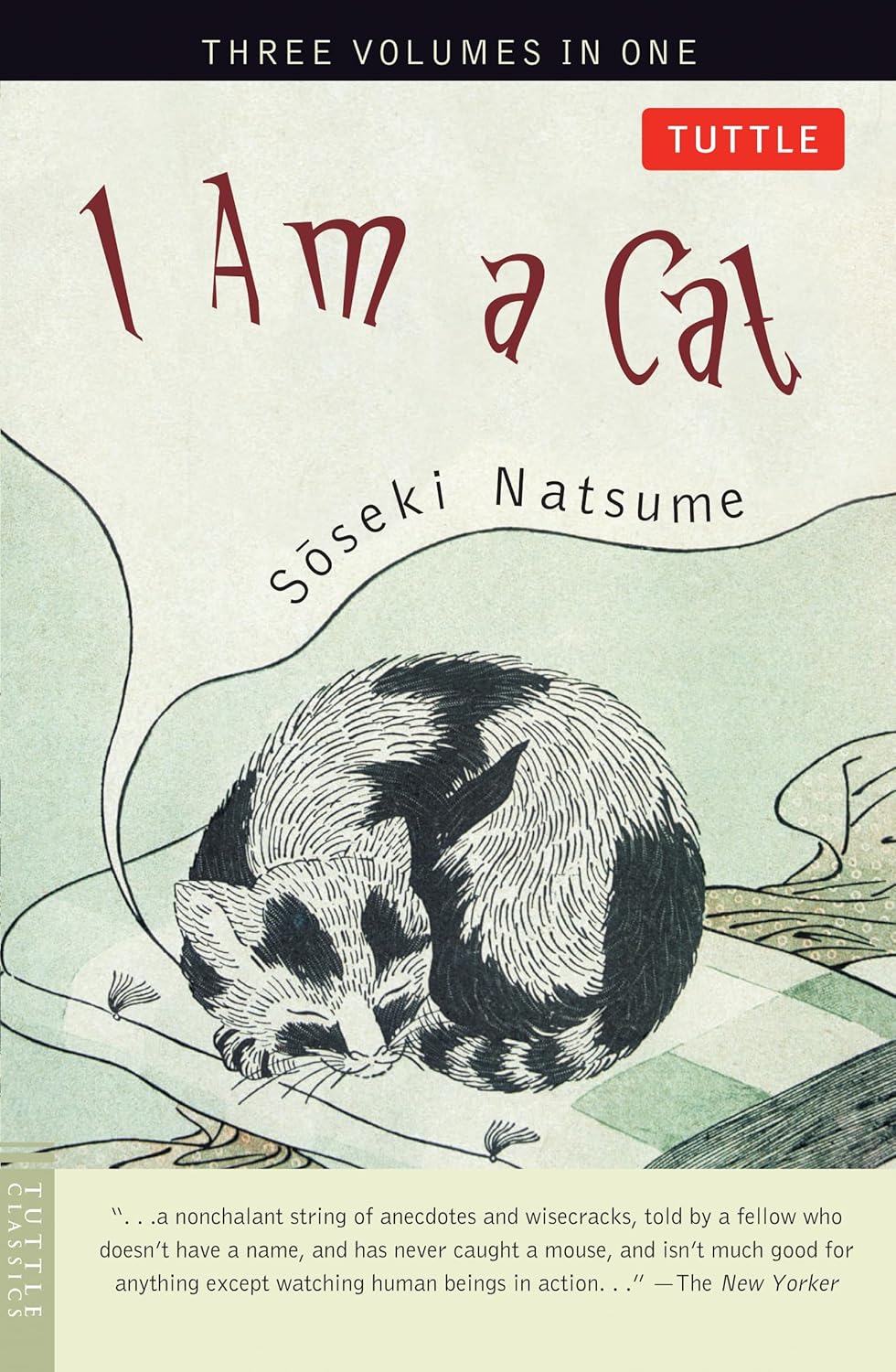
I Am a Cat
Translated by Aiko Ito
— Worth the detour
About
A stray cat with no name and no talent for catching mice takes up residence in the home of a pompous schoolteacher and proceeds to observe — with withering precision — the vanities, pretensions, and petty absurdities of Meiji-era Japanese society. The cat watches his owner's intellectual posturing, the neighbors' social climbing, and the general human talent for self-deception, reporting it all with the detached superiority that only a cat can sustain for six hundred pages. Soseki's comic masterpiece, serialized between 1904 and 1906, invented a narrative voice that Japanese literature hadn't heard before — irreverent, modern, and deeply amused by the gap between how people see themselves and how they actually behave. The satire is aimed at the educated middle class, but the cat's observations land on anyone who has ever taken themselves too seriously. The novel that launched modern Japanese fiction — narrated by a creature who finds the entire species disappointing, and says so with enormous style.