E. Dale Saunders
When E. Dale Saunders first encountered Kobo Abe's work in the original Japanese, he recognized something that most English readers would never experience: the peculiar architecture of Abe's prose, where philosophical inquiry builds like a maze with no exit. Rather than treating translation as a matter of finding equivalent words, Saunders approached it as an act of reconstruction—preserving not just meaning but the vertiginous sensation of reading Abe, that uncanny feeling of being trapped inside someone else's logic.
Saunders' trajectory into translation was neither accidental nor fashionable. Beginning with Inter Ice Age 4 in 1971, he spent decades with Abe's corpus before the wider literary world caught up. His early translation of this cybernetic fever dream—a novel about a computer scientist attempting to predict human evolution—established what would become his signature approach: rendering Abe's abstract, almost mathematical thinking into English prose that somehow feels both coolly rational and deeply unsettling. Where lesser translators might smooth over Abe's repetitions and circularities, Saunders lets them breathe, understanding that they are features, not bugs.
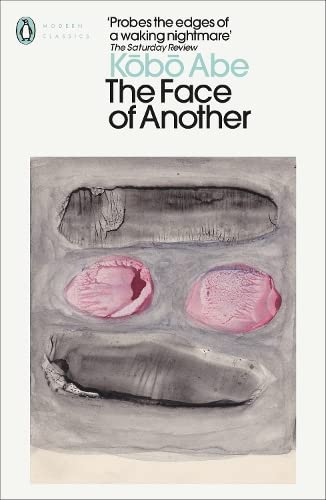
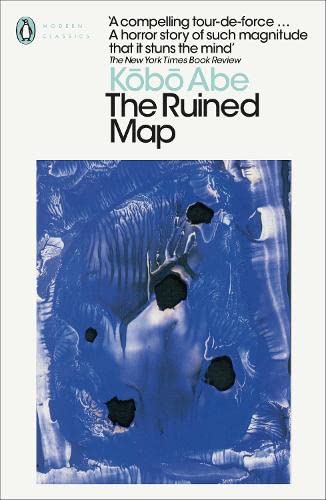
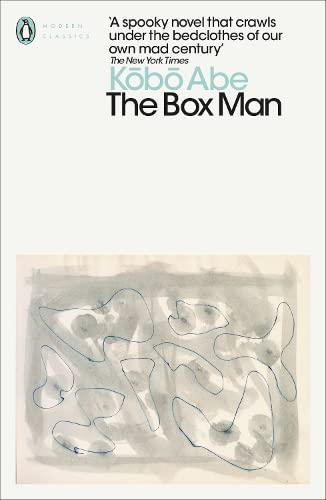
The publication of The Woman in the Dunes in 2011 marked a watershed moment, introducing Saunders' vision to a new generation of readers. But his most significant work came in the rapid-fire republications of 2019-2020: The Face of Another, The Box Man, and The Ruined Map. These volumes revealed the full scope of Saunders' achievement. In The Face of Another, his handling of the unnamed narrator's obsessive meditation on identity and disguise achieves an almost hypnotic precision—each phrase carries weight, each repetition deepens the psychological entrapment. The Box Man proved even more demanding: a novel narrated from inside a cardboard box, where the boundary between observer and observed dissolves entirely. Saunders' translation maintains the prose's claustrophobic intimacy while keeping readers oriented in Abe's fundamentally disorienting landscape.
What distinguishes Saunders is his refusal to "clarify" Abe for comfort. His sentences can be long and taxing; his vocabulary sometimes deliberately stiff. Yet this very difficulty mirrors Abe's original vision—a world where meaning is provisional and human agency is perpetually in question. After half a century of stewarding Abe's work into English, Saunders has become something rare: the invisible architect who made it possible for English readers to experience not a domesticated version of Abe, but Abe as he truly is—strange, fugitive, and inexhaustibly strange.