Darryl Sterk
Darryl Sterk didn't set out to translate. He arrived in Taiwan in the late 1990s with a linguist's curiosity and a philosopher's restlessness, the kind of person who picks up a language to understand how a place thinks. What he found in contemporary Taiwanese and Japanese literature was something Western readers had largely missed: writers wrestling with ecological collapse, political haunting, and the granular textures of ordinary life in ways that felt urgent and unresolved. He began translating almost by accident—a friend's manuscript, then another—but the work revealed itself as something essential: not interpretation, but excavation.
His translation of Wu Ming-Yi's Stolen Bicycle (2017) announced a translator uninterested in smoothing surfaces. The novel cycles through Taiwan's postwar memory and industrial transformation, its form as fragmented as its narrator's search for his lost bicycle. Sterk's English mirrors Wu's refusal to resolve, keeping the book's layered temporality intact, letting readers sit with the discomfort of a history that won't cohere. Where other translators might have linearized, clarified, made it "accessible," Sterk honors the original's opacity—the feeling of grasping at something just beyond understanding.
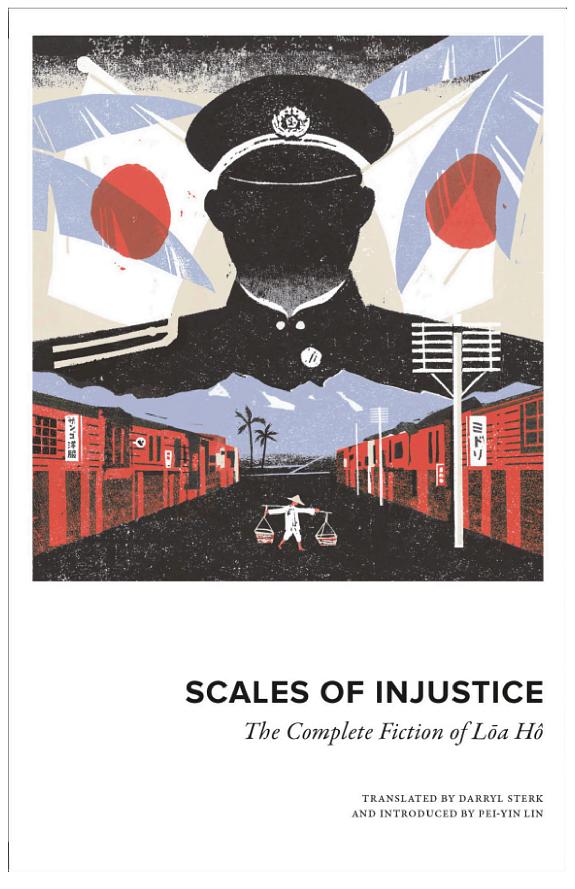
Two years later came Scales of Injustice (2018), Hô Lōa's searing critique of Japanese colonial rule and its psychic aftermath. Here Sterk faced different demands: a work of intellectual ferocity that weaponizes language itself against historical amnesia. His translation captures the book's density without becoming impenetrable, preserving the Okinawan author's refusal to let Japanese readers—or translators—off easy. Every technical term, every shifted register, every untranslatable cultural reference becomes part of the reader's reckoning.
What distinguishes Sterk's work is a particular kind of humility: the conviction that the translator's job is not to make a book "work" for English readers, but to faithfully complicate them. His translations demand something of you. They don't offer the false comfort of total comprehension, but instead the harder satisfaction of encountering a consciousness genuinely other. In an era when translation is often praised for its "fluency," Sterk's versions read like acts of resistance—insisting that Taiwan and Japan's literary conversations with themselves matter too much to be flattened into universal accessibility.