Alfred H. Marks
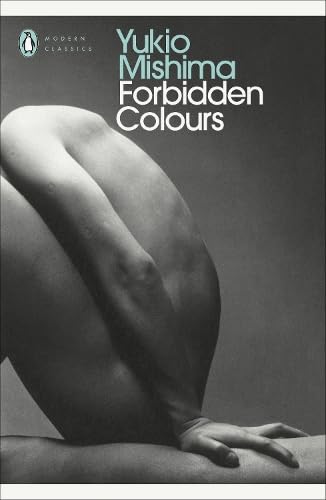
Alfred H. Marks came to Yukio Mishima's work at a moment when the Japanese writer's reputation in English-speaking countries was crystallizing around a singular, dangerous myth—the man who committed ritual suicide, the ultranationalist, the aesthete of death. It was 1980 when Marks published his translation of Forbidden Colors, a novel about a beautiful young man weaponized by an older gay man for purposes of seduction and revenge, and the translation arrived without fanfare, without the biographical apparatus that would later come to frame Mishima's work in English. This was strategic, perhaps, or simply a matter of timing. Either way, Marks chose to let the novel's baroque interiority speak for itself.
What distinguishes Marks's approach is his refusal to make Mishima palatably exotic or safely transgressive for anglophone readers. His prose preserves the novelist's architectural precision—the way Mishima constructs sentences like nested boxes, each one containing compressed emotional pressure. In Forbidden Colors, this manifests as a kind of linguistic claustrophobia: the reader experiences Yuichi's beauty not as transcendent but as a trap, a prison of flesh that others have already furnished and inhabited. Marks's English mirrors this suffocation without becoming purple or self-consciously "literary." The effect is almost clinical, which makes the emotional devastation hit harder.
Thirty years later, Marks returned to Mishima with Thirst for Love (2010), a novel about female desire and suburban entrapment that had long languished in obscurity outside Japan. Here again, Marks demonstrates his gift for rendering Mishima's peculiar blend of realism and psychological distortion. The translation captures the novel's unsettling intimacy—the way a mother-in-law's jealousy becomes indistinguishable from erotic obsession—without inflecting it with modern psychological vocabulary that would flatten the work's strangeness.
Marks's translations have never achieved the prominence of those by Jay Rubin or Juliet Winters Carpenter, translators who came to dominate the Mishima landscape in English. Yet his work possesses a quality that readers return to: a kind of respectful austerity, a conviction that Mishima's sentences need room to breathe, not to be explained. As new generations discover Mishima outside the shadow of his death, they're finding that Marks's Forbidden Colors and Thirst for Love were never waiting to be "rediscovered"—they were simply waiting for readers willing to sit with their discomfort, to let the prose do its work.