Joel Martinsen
Joel Martinsen came to translation through the back door of obsession. In the early 2000s, he was living in Beijing as a blogger and technology writer, observing China's internet boom from the inside, when he encountered Liu Cixin's The Three-Body Problem. The novel struck him with the force of a revelation—but the existing English translation felt thin, inadequate to the ambition of Liu's vision. Rather than accept this gap, Martinsen did something radical: he decided to learn Chinese well enough to fix it. What began as personal frustration became a calling that would eventually position him as the primary English-language voice for one of science fiction's most consequential contemporary authors.
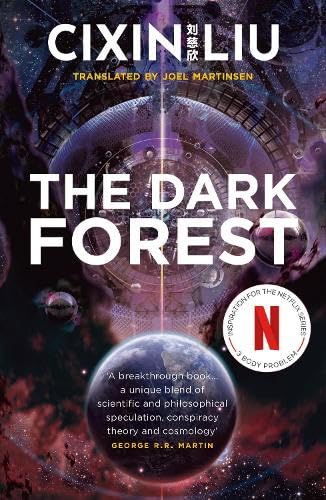
The translations that followed—The Dark Forest (2015) and Ball Lightning (2018)—bear the mark of someone who came to the work not through academic training but through genuine need. Martinsen's prose has a deliberate, almost austere quality that mirrors Liu's own style. Where a less careful translator might soften Liu's philosophical digressions or trim his longer conceptual passages, Martinsen preserves them entire, trusting the reader to sit with the strangeness. In The Dark Forest, the novel's central cosmic principle—the solution to the universe's darkness through mutual assured destruction—emerges with crystalline clarity in Martinsen's rendering. He doesn't beautify; he clarifies.
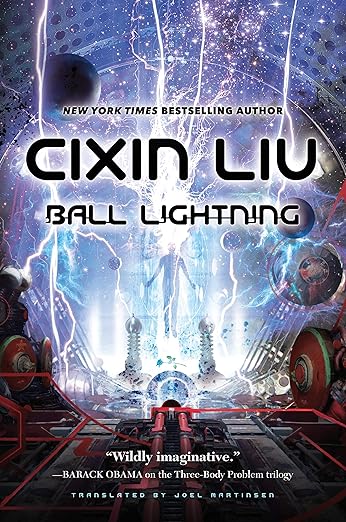
What distinguishes Martinsen's work is his fidelity to Liu's particular brand of hard science fiction reasoning, where physics and metaphysics collide. He renders technical terminology with precision while maintaining the emotional register of Liu's characters as they confront an indifferent cosmos. The translation of Ball Lightning, with its exploration of ball lightning as both physical phenomenon and metaphor for human limitation, showcases Martinsen's ability to hold multiple registers simultaneously—the scientific, the philosophical, the intimate.
Martinsen's achievement lies not in winning major translation prizes, but in something more foundational: he made Liu Cixin readable in English at a moment when the author was beginning his ascent toward the Hugo Award and international recognition. His versions became the definitive English texts, shaping how an entire generation of Anglophone readers would understand Liu's vision of humanity's place in a hostile universe. As Liu's work continues to influence science fiction globally, Martinsen's translations remain the essential gateway—a bridge built not by literary ambition alone, but by the kind of sustained attention that only genuine puzzlement can demand.