Ken Liu
When Ken Liu first encountered the manuscript for The Three-Body Problem, he wasn't hunting for the next great science fiction epic. He was thinking about his parents. Liu had grown up in a Chinese-speaking household in America, fluent in both languages but never quite inhabiting either fully. Translation arrived not as a career choice but as a reckoning—a way to hold something precious without letting it dissolve in the space between worlds. That impulse, born from personal translation of identity itself, shaped everything that followed.
What distinguishes Liu's work is a quality almost architectural: he doesn't merely convert Chinese sentences into English ones, but reconstructs entire conceptual frameworks. In The Three-Body Problem, Liu faced a cascading problem—how to preserve the ache of Cultural Revolution trauma, the vertigo of first contact with alien intelligence, and Liu Cixin's particular brand of cosmic pessimism in a language that tends toward the colloquial. His solution was elegant restraint. He gave English readers a prose that feels slightly formal, occasionally oblique, matching the emotional distance of characters confronting the unthinkable. When a character receives the message from Trisolaris, the language doesn't burst; it crystallizes.
This approach deepened across The Dark Forest (2015) and Death's End (2016), where Liu grappled with increasingly abstract concepts—the sophon, the dark forest deterrence, the entropy death of civilizations. His translations caught the architecture without sacrificing the wonder. Then came the graphic novels: The Wandering Earth, The Village Teacher, and others, where Liu discovered he could strip his prose even further, letting the visual language share the burden. Those collections expanded the trilogy's reach, introducing millions of Netflix viewers to Liu Cixin's work while proving that Liu's sensibility could flex across formats.
The recognition came steadily. His translation of The Three-Body Problem arrived at a cultural moment primed for it—China's rising influence, science fiction's growing seriousness—but Liu's work had already done the deeper labor of making the text feel inevitable in English, as though it had always belonged here. What remains striking is Liu's own trajectory: from someone seeking coherence between two languages, to the translator through whom English readers first learned to think in Chinese science fiction's particular frequencies of dread and transcendence.
On InkEast (10)
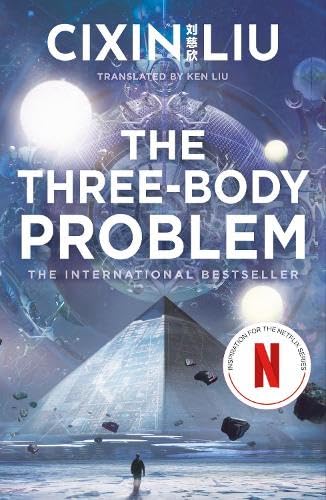
The Three-Body Problem: Now a major Netflix series
2015

Waste Tide
2019

Broken Stars: Contemporary Chinese Science Fiction in Translation
2019
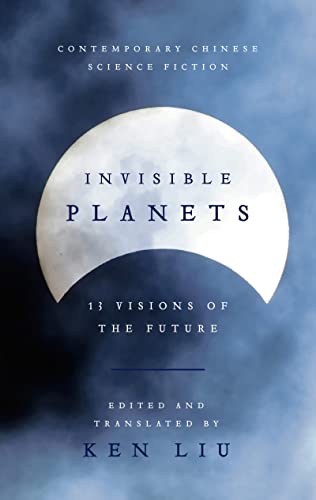
Invisible Planets
2016
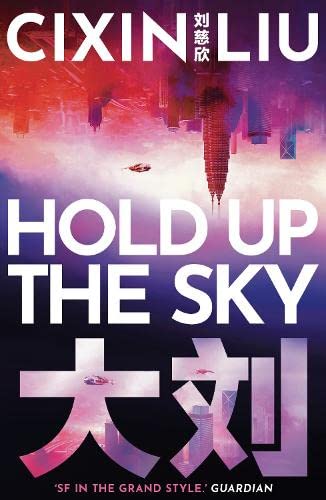
Hold Up the Sky
2020

The Wandering Earth
2021
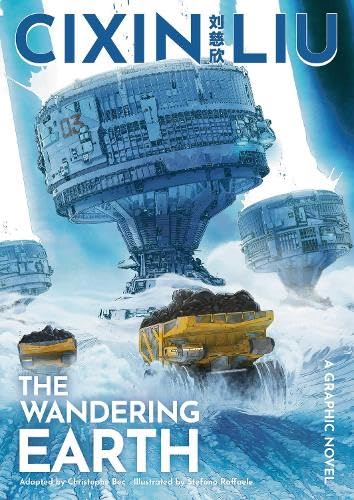
Cixin Liu's The Wandering Earth: A Graphic Novel
2021

The Way Spring Arrives and Other Stories
2022
The Way Spring Arrives and Other Stories: A Collection of Chinese Science Fiction and Fantasy in Translation from a Visionary Team of Female and Nonbinary Creators
2022
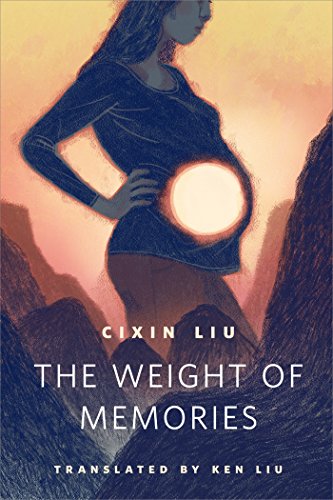
The Weight of Memories: A Tor.com Original
2016