Michael Berry
Michael Berry came to translation not through academic training but through the simple act of reading in a language he loved. Living in Taiwan in the 1990s, he found himself captivated by contemporary Chinese fiction—stories that American publishers hadn't yet discovered, written in a vernacular that textbooks couldn't teach. Rather than move into academia or publishing's established pipeline, Berry began translating out of necessity: he couldn't bear that these voices remained inaccessible to English readers. It was an amateur's impulse that would eventually reshape how American literature readers encounter contemporary Chinese writing.
His early work on Chang Ta-chun's Wild Kids: Two Novels About Growing Up (2000) announced a translator unafraid of stylistic chaos. Chang's prose is deliberately fractured, rebellious, the voice of a writer rejecting mainland conventions to capture Taiwanese youth culture in all its linguistic messiness. Berry doesn't smooth these edges. Instead, he mirrors that rupture in English, trusting readers to inhabit discomfort. The result crackles with authenticity—you feel the generational anger, the sexual confusion, the political undercurrents that Chang was documenting in real time. It wasn't the kind of translation that wins establishment prizes, but it was the kind that mattered to writers who recognized themselves on the page.
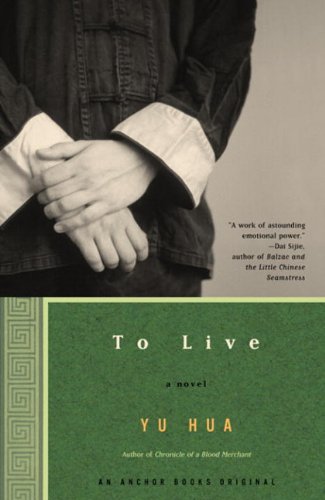
With To Live (2007), Yu Hua's devastating chronicle of individual suffering across China's revolutionary decades, Berry demonstrated a different register entirely. Yu's prose is deceptively plain—a peasant's voice recounting catastrophe with the flatness of lived trauma. To capture this required not virtuosity but restraint: Berry removes himself almost entirely, allowing the repetition, the spare syntax, the accumulation of loss to do their devastating work. The translation preserves Yu's refusal to sentimentalize, his insistence that survival itself can be a kind of tragedy. English readers experience not a interpretation of Yu's vision but something closer to its transmission.
What distinguishes Berry's work is his attentiveness to the sound of Chinese prose as it translates into English idiom—not literal meaning, but the emotional cadence beneath the words. Whether rendering Chang's anarchic energy or Yu's austere restraint, he recognizes that fidelity means capturing not what was said but what was felt in the saying. As Chinese literature continues its reckoning with contemporary publishing, Berry's relatively modest output proves that translation—real translation—requires not productivity but precision, not name recognition but an almost monastic devotion to individual texts.