Andrew F. Jones
When Andrew F. Jones first encountered Yu Hua's fiction in the 1990s, the Chinese writer was still largely unknown in the English-speaking world—a circumstance that seemed almost impossible given the raw power of his prose. Jones, trained in Chinese language and literature at the University of Michigan, recognized immediately that Yu Hua's work demanded more than competent translation; it required a translator willing to sit with sentences that deliberately fractured conventional narrative logic, that made readers uncomfortable by design. This recognition sent Jones down a path that would make him instrumental in establishing Yu Hua's international reputation, even as the relationship between translator and author would remain characteristically unsentimental.
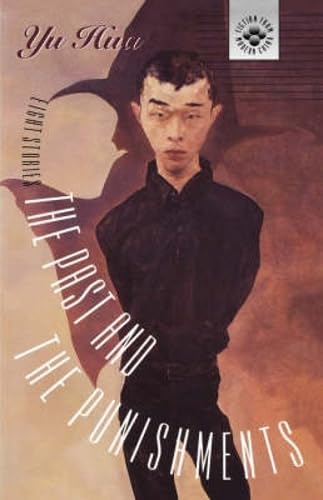
Jones's 1996 collection The Past and the Punishments: Eight Stories by Yu Hua introduced English readers to a writer whose minimalist style and graphic violence seemed to emerge from nowhere—though they emerged, in fact, from a very specific China, one fractured by recent history and accelerating change. The stories moved with a calculated coldness that required Jones to resist the urge to soften or clarify. Where a less scrupulous translator might have smoothed away Yu Hua's repetitions or explanatory gaps, Jones preserved them, allowing readers to feel the disorientation that was fundamental to the writer's vision.
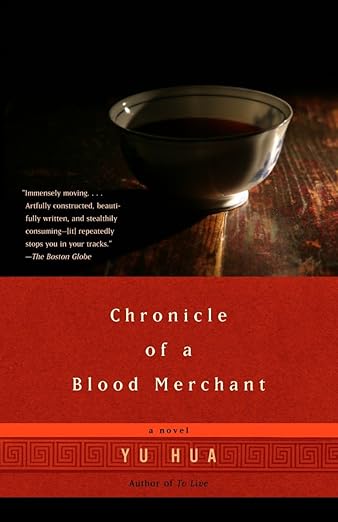
A decade later, Jones returned to Yu Hua with Chronicle of a Blood Merchant (2007), a novel that traces three generations of a family bound by a hereditary blood disease and the father's obsessive, ultimately futile attempt to sell his blood to secure his son's future. The translation captures the novel's tonal peculiarity—how tenderness and brutality coexist in the same sentence, how the narrator's voice slides between detachment and desperate love. Jones renders the Chinese cultural specificity without annotation, trusting readers to navigate unfamiliar terrain. The prose moves with a deliberate flatness that mirrors the father's emotional exhaustion, creating a reading experience that feels simultaneously intimate and distant.
What distinguishes Jones's work is his refusal of the translator's typical impulse to make an author "accessible" to foreign readers. Instead, he meets Yu Hua's difficulty head-on, producing translations that feel like they were always written in English—not because they erase their origins, but because they honor the original's essential strangeness. For readers seeking entry into contemporary Chinese literature, Jones's translations don't offer comfort; they offer something rarer: the unsettling recognition that another writer's vision can remake your own.